Dr. Kate Truitt & Associates, A Psychological Corporation

Why Our OCD Treatments Work So Well:

1) We treat the full OCD loop, including mental compulsions

Most people don’t fail ERP because they’re “not trying hard enough.” They fail because the compulsion simply goes underground—into rumination, self-reassurance, reviewing, “testing,” and quiet avoidance. We know how to spot that and treat it directly.

Image representing depression
2) We don’t rely on willpower — we train the nervous system

White-knuckling is a nervous system strategy: brute force, high strain, low sustainability. NeuroTriad work gives you structured regulation tools so your system can learn without going into shutdown, panic, or avoidance.

3) We build ERP around your real life, not a worksheet

Our personalized care means we design treatment to fit the actual contexts where OCD shows up: relationships, work, parenting, health fears, performance pressure, moral perfectionism, decision-making. Progress has to generalize to real life—or it’s just homework.

4) We’re relentlessly strategic

OCD is strategic. We are more strategic.
We map patterns, measure what’s maintaining the cycle, adjust exposures with precision, and keep the work moving forward—so you’re not in therapy for years “processing” a loop that needs to be retrained

Like this page? Please share it with your colleagues & friends.

Expert Treatment for Obsessive Compulsive Disorder

Previous slide
Next slide

OCD Therapy in Pasadena + Telehealth Across California

OCD isn’t “being organized.” It’s the moment your day is moving along just fine—until a thought drops in like a stone: What if? And suddenly you’re not living your life anymore; you’re negotiating with your nervous system.

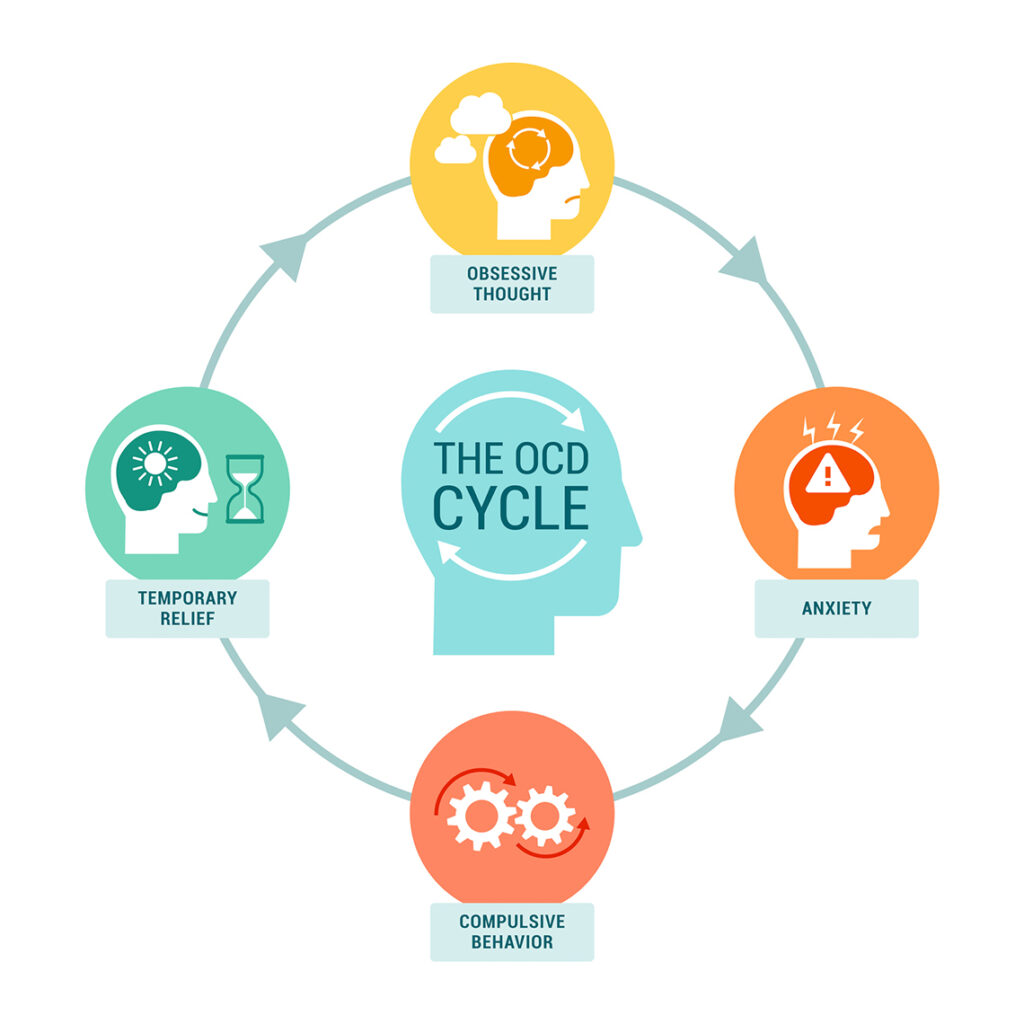
The doubt hits first. Intrusive. Sticky. Loud. And then comes the pull to do something—anything—to make the discomfort stand down. Check. Wash. Replay. Re-read. Reassure. Ask. Avoid. And for a breath or two, it works. That’s the cruel part: the relief is real… and temporary. The brain learns, Oh, that worked—do it again. So the doubt returns, often louder, and the loop tightens.

At Dr. Kate Truitt & Associates, we provide concierge-level OCD therapy using Exposure and Response Prevention (ERP)—the most effective, evidence-backed treatment approach for OCD. We offer in-person sessions in Pasadena, California, and secure telehealth across California.

At Dr. Kate Truitt & Associates, we provide concierge-level OCD therapy using Exposure and Response Prevention (ERP)—the most effective, evidence-backed treatment approach for OCD. We offer in-person sessions in Pasadena, California and secure telehealth across California.

Schedule a complimentary 30-minute phone consultation: info@drtruitt.com

Insight Isn't the Problem with OCD - Compulsiveness is.

Most people with OCD aren’t lacking intelligence or self-awareness. In fact, you may be the person everyone relies on—the competent one, the thoughtful one, the one who sees ten steps ahead.

You might even know your fears aren’t “logical.”

And still:

Your brain demands certainty.
Your body spikes into alarm.
Your mind starts bargaining: Just check one more time. Just replay it once more. Just make sure.

That’s not a character flaw. That’s a trained nervous system pattern—your brain trying to protect you by chasing an impossible promise: perfect certainty.

The good news is that just as your brain learned these patterns, patterns can be retrained. Your brain is designed to adapt and change across your life.

What the Symptoms of OCD Look Like:

Common OCD patterns include:

  • Contamination fears (germs, illness, “dirty” sensations)

  • Checking (stove, locks, doors, emails, body sensations)

  • Harm OCD (intrusive fears of hurting someone or “snapping”)

  • “Just right” OCD (symmetry, ordering, repeating until it feels right)

  • Moral/scrupulosity OCD (fear of being “bad,” unethical, unforgivable)

  • Relationship OCD (endless doubt-checking about feelings, certainty, “the right choice”)

And compulsions aren’t always visible. Many happen internally:

  • Mental reviewing / replaying

  • Rumination

  • “Testing” feelings

  • Silent praying or repeating phrases

  • Reassurance-seeking (from others or from your own mind)

  • Avoidance that quietly shrinks your life

The Newest Advances in OCD Treatment:
Exposure and Response Prevention + Brain Based Interventions

How ERP works here (and why it’s different than “white-knuckling it”)

ERP stands for Exposure and Response Prevention—and in the right hands, it’s not about forcing you into panic or barking “just stop.” It’s about teaching your brain a new relationship with uncertainty, discomfort, and the urgent pull to neutralize what you’re feeling.

But here’s what we’ve learned after years of doing this work with high-functioning, deeply capable humans: if you only work the symptoms and ignore the brain, you can make progress… and still feel like you’re fighting yourself the entire way.

That’s why our treatment integrates gold-standard ERP with Dr. Truitt’s NeuroTriad and Brain Partnership approach—so we’re not just interrupting compulsions, we’re retraining the whole system that keeps OCD fed.

The Brain Partnership lens: OCD is a protection strategy that got too good at its job

In Brain Partnership work, we don’t treat your brain like an enemy. We treat it like a partner—one that’s trying to keep you safe, but using outdated methods.

OCD is often the survival brain’s attempt to guarantee three things:

  • Safety (“Nothing bad can happen.”)

  • Belonging (“I won’t be rejected, judged, abandoned.”)

  • Agency (“I can control the outcome.”)

The problem is that OCD’s method of protecting those needs is certainty-chasing—an impossible assignment. So the brain doubles down: Check again. Clean again. Replay again. Make sure.

ERP teaches your brain a different truth: you can have safety without certainty.

ERP, step-by-step — with the NeuroTriad Model scaffolding

Exposure (the “E”)

We practice approaching triggers intentionally, in a structured way—at a pace that’s challenging but doable. This isn’t random. It’s planned, calibrated, and built for real nervous systems (not robot nervous systems).

NeuroTriad integration: we don’t just pick exposures based on fear. We build them around:

  • your specific OCD “rules” and invisible rituals,

  • your tolerance window (so you’re stretched, not flooded),

  • and the values you’re reclaiming (time, relationships, leadership, sleep, presence).

In other words: exposures aren’t just hard things. They’re purposeful reps that give your life back.

Response Prevention (the “RP”)

Instead of doing the compulsion (including the sneaky mental ones), you practice staying with the feeling long enough for your brain to learn something essential:

  • distress rises,

  • distress falls,

  • and you don’t need the ritual to survive it.

Brain Partnership integration: response prevention becomes more than “don’t do the thing.” We train you to notice how your system tries to bargain—reassurance, checking your feelings, mental reviewing, subtle avoidance—and we give you a clear, repeatable plan for what to do instead. That’s the moment the brain starts updating: Discomfort isn’t danger. Uncertainty isn’t an emergency. I can stay present and still be safe.

Ready to stop living on OCD’s schedule? Let’s make a plan that’s structured, science-based, and built for your real life—so you can meet uncertainty without spiraling, and reclaim time, clarity, and peace without relying on rituals to feel okay. Schedule a complimentary 30-minute phone consultation to talk through what you’re facing and what treatment could look like for you—call 626-524-5525 or use the contact form to get started.

Visit our Living Your Excellence Blog

Are you ready for empowered change? It’s time to live your excellence. Choose from our articles below to explore how the latest advances in neuroscience create opportunities for harnessing the power of neuroplasticity, and create a space for inspiration to flow.

Like this page? Please share it with your colleagues & friends.