This video offers a grounded way to notice the language of your inner voice and begin separating who you are from the thoughts that repeat in your mind. Awareness creates space for change, without pressure or self-judgment. Take a moment this week to notice the thoughts that arise when you fall short of expectations. Write them down and ask yourself which ones still belong in your life, and which ones can be released
Making gratitude a daily habit is proven to reduce stress. Adding in the superpower of mindfulness can literally change the way your brain experiences the world. Mindfulness allows you to pay attention in a certain way, allowing everything in your life to be different from anyone else’s. Mindfulness brings unique awareness to your experiences. It can be used in your sensory experiences as well as your thoughts and emotions, allowing you to notice those experiences without overreacting to them. Join Dr. Kate and Rebecca Turner, LMFT, in this video to learn more and find easy ways to integrate mindful gratitude into your daily life.
By Dr. Kate Truitt
Maybe you’ve had a day where you did all the “right” things. You showed up. You got through the meeting. You kept your voice even. You answered the texts. You held it together—until you didn’t.
And then it hits: your chest feels tight, your thoughts speed up, your skin feels thin. Or the opposite—your mind goes fuzzy, your body feels far away, and you can’t quite access the part of you that cares, reacts, or knows what to say next.
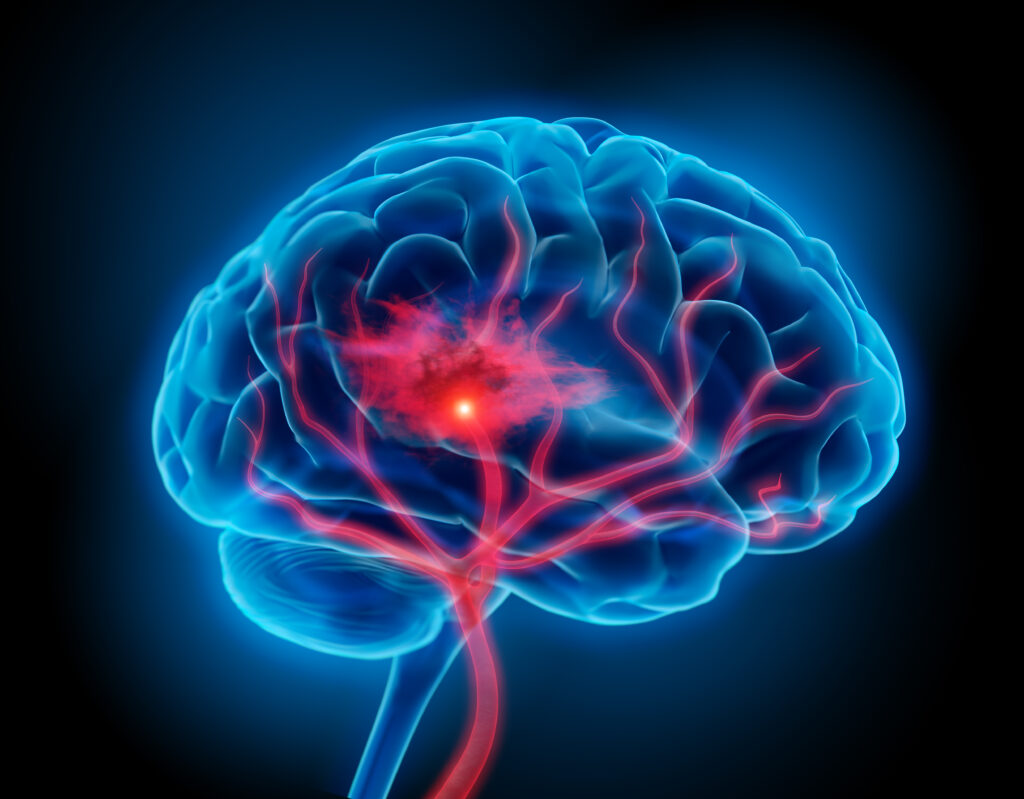
If you’ve ever wondered why your system can swing between too activated and oddly absent, you’re not imagining it. This pattern is especially common when ADHD is part of your wiring, trauma is part of your history, or both are living in the same nervous system. And one of the most helpful ways to understand it is through the lens of the amygdala—your brain’s fast filter for what matters, what’s urgent, and what needs a response (Boodoo et al., 2022; Kredlow et al., 2022).
I often describe the amygdala as your brain’s salience-and-threat filter—the system that decides, in a fraction of a second:
“Pay attention.”
“This matters.”
“Be ready.”
When the amygdala tags something as urgent, your whole body organizes around action: your autonomic nervous system shifts, your attention narrows, and your brain marks the moment as important—because memory is one of the ways the nervous system protects you (Kredlow et al., 2022).
Regulation, then, isn’t a single skill. It’s a relationship between brain networks—especially how the amygdala communicates with prefrontal regions involved in meaning-making and emotion regulation. Meta-analytic findings show reliable patterns of amygdala–prefrontal coupling during emotion regulation tasks, including reappraisal-based down-regulation (Berboth & Morawetz, 2021).
ADHD is frequently described in terms of attention, but for many people it’s also about state shifting—how quickly your system revs up, how intensely it locks on, and how long it takes to come back down.
In adults with ADHD, emotion dysregulation is common and clinically meaningful. Research suggests differences in regulation strategies—often lower cognitive reappraisal and higher expressive suppression—alongside measurable differences in amygdala-related functional connectivity patterns (Liu et al., 2022). More recent research in ADHD with prominent emotion dysregulation also reports atypical connectivity patterns involving prefrontal regions and the amygdala, supporting the idea that attention and regulation circuitry overlap for a subset of individuals (Li et al., 2025). This can look like:
Fast activation: overwhelm, irritability, urgency, rejection sensitivity-type pain
Slow recovery: once you’re activated, it’s harder to settle
“Fix it now” behaviors: arguing, escaping, overexplaining, doom-scrolling
Trauma has a way of teaching the brain that safety can change quickly. PTSD is often conceptualized as a condition involving fear/threat dysregulation with emphasis on circuitry including the amygdala, hippocampus, and medial prefrontal regions—especially processes governing acquisition, expression, inhibition, and extinction of threat responses (Kredlow et al., 2022).
In real life, that can show up as:
hypervigilance, startle, scanning, sleep disruption
intrusive re-experiencing or body-memory phenomena
avoidance (including “productive” avoidance like overworking)
shutdown/dissociation when the system can’t sustain fight/flight
ADHD and trauma-related patterns can resemble each other on the surface: distractibility can be threat-scanning; impulsivity can carry survival urgency; emotional volatility can reflect regulation vulnerability and protective responding.
A scoping review on ADHD and childhood trauma highlights a bi-directional relationship and emphasizes that assessment and treatment planning need to be integrated rather than siloed (Boodoo et al., 2022).
A practical way to hold the overlap:
ADHD often reflects vulnerability in state regulation (arousal/effort/attention shifting), which can spill into emotion regulation (Liu et al., 2022).
Trauma/PTSD often reflects vulnerability in safety prediction and threat learning/regulation (Kredlow et al., 2022).
The amygdala sits centrally because both pathways shape what gets flagged as urgent—and what gets suppressed.
When ADHD and trauma overlap, it can feel like you’re constantly trying to manage intensity—either containing it or searching for yourself after you’ve gone offline.
This is exactly the kind of pattern we help clients work with: mapping your activation and recovery, identifying your triggers, and building regulation skills that are realistic, trauma-informed, and grounded in the brain.
If you’re ready, contact us today to schedule your free 30 minute consultation. We’ll talk through what you’re noticing, what you’ve tried, and what support could look like—step by step. Or learn more about our specialty ADHD therapy program here!
And if you’d like a starting place today, download my free Partnering with Amy (the Amygdala) Handout here and join the newsletter for weekly neuroscience-informed micro-tools.
———————————
Federal Department of Consumer Affairs and Board Of Behavioral Science Notifications For Consumers