Related Resources
For Understand and Navigating Traumatic Grief and Loss
Weird Grief Things That Are Actually Normal with Dr. Kate Truitt
Join Dr. Kate Truitt as she sheds light on the common symptoms of grief that can leave us feeling overwhelmed, broken, or lost. Grief is weird. But it doesn’t have to be,
A Meditation for Cultivating Forgiveness with Grief and Loss
Experience the profound benefits of guided meditation with Dr. Kate Truitt, a renowned clinical psychologist and applied neuroscientist. Dr. Kate’s expertise in neuroscience and mindful touch leads you on a journey of self-forgiveness and self-love, offering a transformative path to inner peace and personal growth.
Managing the Overwhelming Emotions of Traumatic Grief and Loss
In this video, Dr. Kate Truitt delves into the unique experience of grieving after a traumatic loss. Discover how emotions can resemble a tidal wave or detachment, both of which are normal reactions. Dr. Kate emphasizes the brain’s struggle with uncertainty, leading to the creation of narratives intertwined with our feelings, and introduces neuroscience-backed tools for supporting your grieving journey.
A Guided Meditation for Cultivating Self Compassion on Your Grieving Journey
Welcome to this healing guided mindfulness meditation, where we combine the power of mindfulness and self-havening to nurture self-compassion during your traumatic grief recovery journey. In the midst of pain and loss, practicing self-compassion becomes a gentle balm for healing.
When Grief Becomes Traumatic: What the Brain Needs Most
By Dr. Kate Truitt
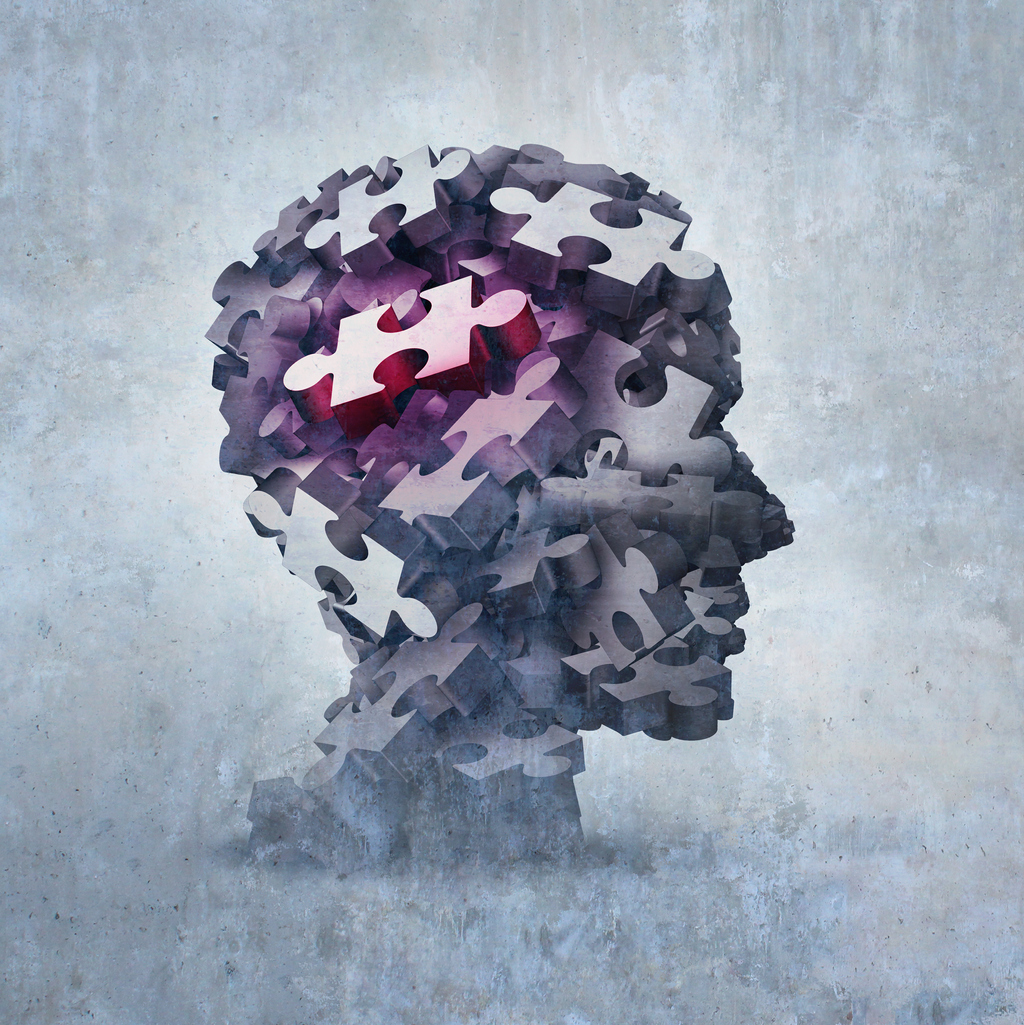
Traumatic grief is more than heartbreak—it is heartbreak fused with the brain’s instinct to survive. When loss is sudden, shocking, or emotionally overwhelming, the nervous system may stay stuck in patterns of alarm, numbness, or collapse long after the moment of loss has passed. If you have ever wondered why grief can feel so disorienting in the body as well as the heart, this is why: your brain is not failing you. It is trying to protect you.
Why Traumatic Grief Feels Different
There are losses that break your heart.
And then there are losses that seem to shatter your entire inner world.
You may know this feeling. Part of you understands what happened, but another part of you still feels braced against it. You want to remember, but your body tightens. You want to cry, but you go numb. You want comfort, yet everything in you feels on guard.
That does not mean you are grieving the wrong way.
It means your grief may also be carrying trauma.
When a loss is sudden, violent, ambiguous, or layered with helplessness, the brain may not process it as sorrow alone. It may also encode it as danger. And once that happens, the nervous system can stay organized around survival rather than restoration. That is why traumatic grief often shows up not just as sadness, but as dread, numbness, intrusive memories, guilt, agitation, shutdown, or the haunting sense that you are no longer fully yourself (Marks et al., 2018; O’Connor et al., 2008).
This is one of the hardest parts of traumatic grief: the heart is mourning while the nervous system is still trying to protect you.
That is not dysfunction. That is adaptation.
Your brain is doing what brains do when something overwhelming happens: it learns fast, it prioritizes survival, and it tries to keep you safe. When we understand that, we can begin to replace self-blame with compassion.
When the Brain Links Love With Danger
One of the most painful realities of traumatic grief is that the brain can begin linking attachment with alarm.
The brain is always learning from experience. It is constantly asking: What matters here? What should I remember? What do I need to do to survive this again?
Under overwhelming stress, those answers can become very narrow.
A memory, a date on the calendar, a song, a smell, or even a familiar silence can trigger the same survival pathways that were activated during or after the loss. Before your thinking brain has had a chance to make sense of what is happening, your body may already be reacting. Your chest tightens. Your stomach drops. Your thoughts race. Or everything goes quiet and far away.
That is not because you are weak.
It is because your nervous system learned that love and danger arrived together, and now it is trying to prevent further harm (Chen et al., 2021; Méndez-Bértolo et al., 2016).
Sometimes what feels like “too much grief” is actually a nervous system carrying too much protection.
That reframe is critical/
Because when we stop treating traumatic grief like a personal failure, we can begin meeting it with the care it actually needs.
This is at the heart of how I think about healing: your brain is not working against you. It is working for you, using the best strategies it has learned to help you survive.
A Gentle Practice for Mapping Your Experience
In moments of traumatic grief, one of the most powerful things you can do is slow down enough to notice what is happening inside you without judgment.
Not to fix it.
Not to force calm.
Just to notice.
In my work, I often use the CASE mapping framework from the NeuroTriad Model to help make sense of overwhelming experiences. CASE invites us to gently observe four parts of our internal world: cognitions, autonomic responses, somatosensory experiences, and emotions. This kind of awareness helps us move from being swallowed by an experience to being in relationship with it.
So when a grief wave comes, try asking yourself:
- Cognitions: What is my mind saying right now?
- Autonomic: What is my nervous system doing right now?
- Somatosensory: Where do I feel this in my body?
- Emotions: What feeling is here right now?
Maybe the thought is, I cannot do this. Maybe your autonomic system feels activated, collapsed, or frozen. Maybe there is pressure in your chest, heaviness in your limbs, or tension in your throat. Maybe the feeling is sadness, panic, anger, guilt, or loneliness.
Our goal is not to change the experience in that moment.
Our goal is to witness it.
And this is important because naming an experience can help restore connection across the brain and body. When we gently notice what is happening inside us, we create the conditions for regulation, integration, and choice. That is part of how neuroplasticity works—not through force, but through repeated moments of awareness and safety (Chen et al., 2021).
Download this tool and many more healing FREE RESOURCES at drkatetruitt.com.
Traumatic grief rarely heals through pressure.
It does not heal because someone tells you to move on. It does not heal because you have learned how to function while hurting. And it certainly does not heal through shame.
Healing begins when the nervous system experiences enough safety to loosen its grip on survival.
That is why I return again and again to this truth: healing is not about battling the brain. It is about partnering with it. When we understand survival responses as adaptive rather than defective, we create space for compassion, curiosity, and change.
And this is also why supported spaces matter so deeply.
So many clinicians, healers, and helping professionals are carrying grief—both their own and the grief of the people they serve—without enough room to metabolize the impact of that work. They are showing up, holding space, and doing their best, all while navigating the cumulative weight of loss, trauma, and responsibility.
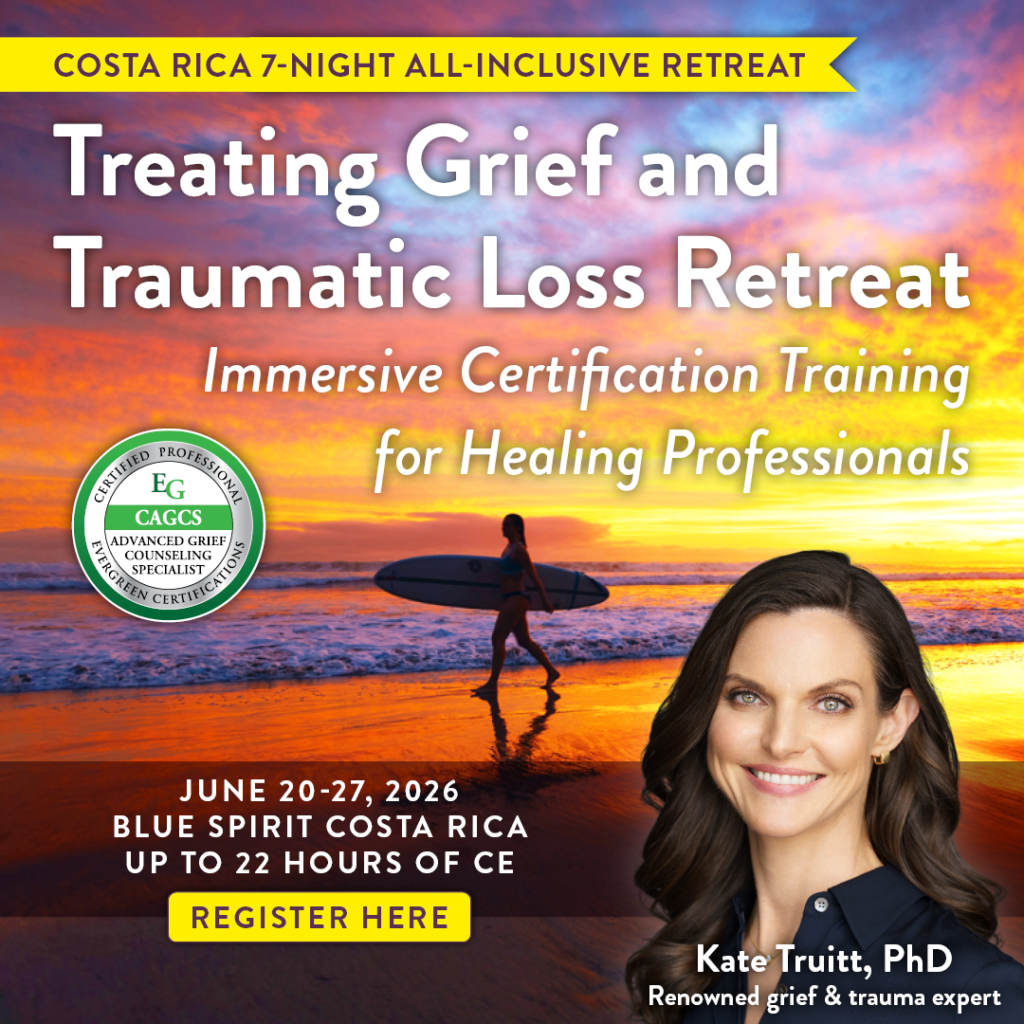
This is one of the reasons I created the Treating Grief and Traumatic Loss Retreat.
I wanted to create a space where healing professionals could deepen their understanding of grief through a trauma-informed, neuroscience-grounded lens while also experiencing the restoration that becomes possible when learning is paired with reflection, embodiment, and community.
This retreat is not about stepping away from the work. It is about stepping more fully into it—with greater skill, greater clarity, and greater compassion.
If you are a clinician, healer, or trauma-informed professional who wants to deepen your capacity to support grief and traumatic loss, I would love to invite you to join me.
Because grief deserves more than management.
It deserves witness.
It deserves skillful care.
And it deserves spaces where the brain, body, and heart can all be part of the healing process.
Your grief is not a problem to solve. It is an experience to be tended.
And with the right support, your nervous system can begin to learn that remembering is not the same as reliving, that love can remain without destroying you, and that healing does not require you to stop grieving.
It simply asks that you begin with compassion.
REFERENCES:
Chen, W. G., Schloesser, D., Arensdorf, A. M., Simmons, J. M., Cui, C., Valentino, R., & McEwen, B. S. (2021). The emerging science of interoception: Sensing, integrating, interpreting, and regulating signals within the self. Trends in Neurosciences, 44(1), 3–16. https://doi.org/10.1016/j.tins.2020.10.007
Marks, E. H., Franklin, A. R., & Zoellner, L. A. (2018). Can’t get it out of my mind: A systematic review of predictors of intrusive memories of distressing events. Psychological Bulletin, 144(6), 584–640. https://doi.org/10.1037/bul0000132
Méndez-Bértolo, C., Moratti, S., Toledano, R., Lopez-Sosa, F., Martínez-Alvarez, R., Mah, Y. H., Vuilleumier, P., Gil-Nagel, A., & Strange, B. A. (2016). A fast pathway for fear in human amygdala. Nature Neuroscience, 19(8), 1041–1049. https://doi.org/10.1038/nn.4324
O’Connor, M. F., Wellisch, D. K., Stanton, A. L., Eisenberger, N. I., Irwin, M. R., & Lieberman, M. D. (2008). Craving love? Enduring grief activates brain’s reward center. NeuroImage, 42(2), 969–972. https://doi.org/10.1016/j.neuroimage.2008.04.256